
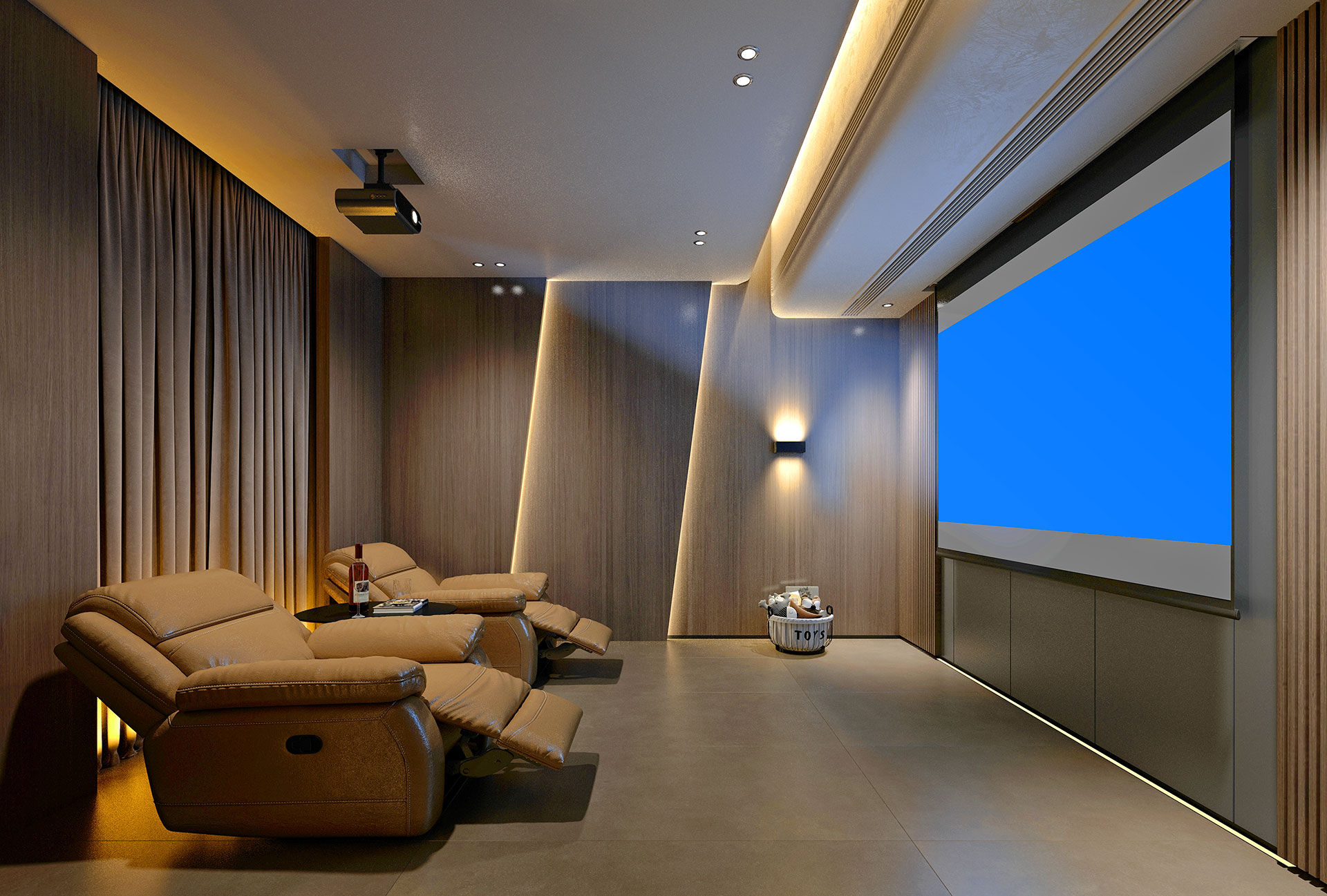
It usually starts the same way. Weeks of research. Screens, speakers, everything ordered and set up. Then comes the moment of truth. It’s loud. Sometimes very loud. But not quite right. The image looks washed out in daylight. Dialogue disappears under the score. The subwoofer rattles the walls in a way that feels distracting, not immersive. That’s when they call a professional.
The issue isn’t the equipment. Most of the time, the gear is solid. The problem is treating a home theater like a list of products instead of a system shaped by the room.
The Room Is Half the System
This is where things usually go wrong.
Sound doesn’t sit still. It reflects off walls, gets absorbed by furniture, and builds up in corners. A speaker that sounds great in a showroom can feel muddy in a room with hard, parallel surfaces. Video follows the same rule. A projector designed for dark spaces won’t hold up in a bright room. Light, screen placement, and viewing angles all decide whether the image looks sharp or just expensive.
What People Skip Before They Buy
Most DIY setups skip the basics:
- What lighting conditions will the room have during use?
- How do the room’s dimensions affect sound, especially bass?
- Where will the seating actually sit in relation to the screen and speakers?
- Do the surfaces reflect sound or absorb it?
Simple questions. But they shape every decision that comes after.
Calibration Is Not Optional
Even good equipment falls short without proper calibration. Speaker levels, crossover settings, delays, and profiles all need to match the room. Auto-calibration tools help, but they only go so far. Unusual spaces need more than a quick microphone pass.
The gear matters. The setup matters more. And the room shapes both. Getting all three to work together is what turns a home theater from something that just exists into something that actually impresses.
Conclusion
Many home theater problems start with poorly designed rooms, not with the gear. They start with good gear placed in the wrong context. A room that hasn’t been considered will always work against the system inside it. No upgrade fixes that. No extra speaker smooths it out.
The difference comes from alignment. Room, setup, and equipment work together instead of competing with each other. That’s what people expect from a home theater. And it’s usually the last thing they plan for.